

What happens after recycling is collected in Millbrae, CA?
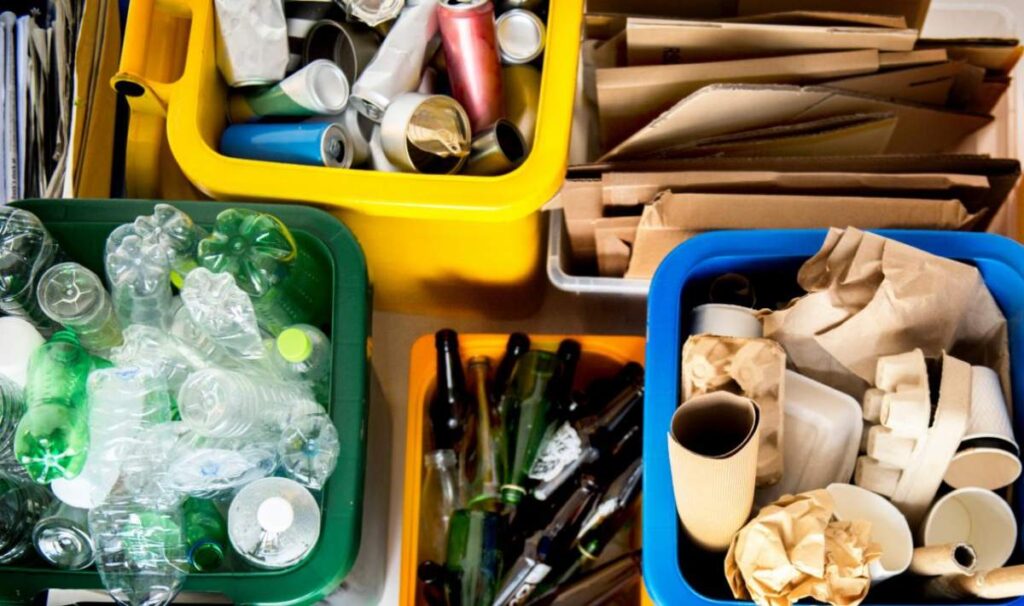
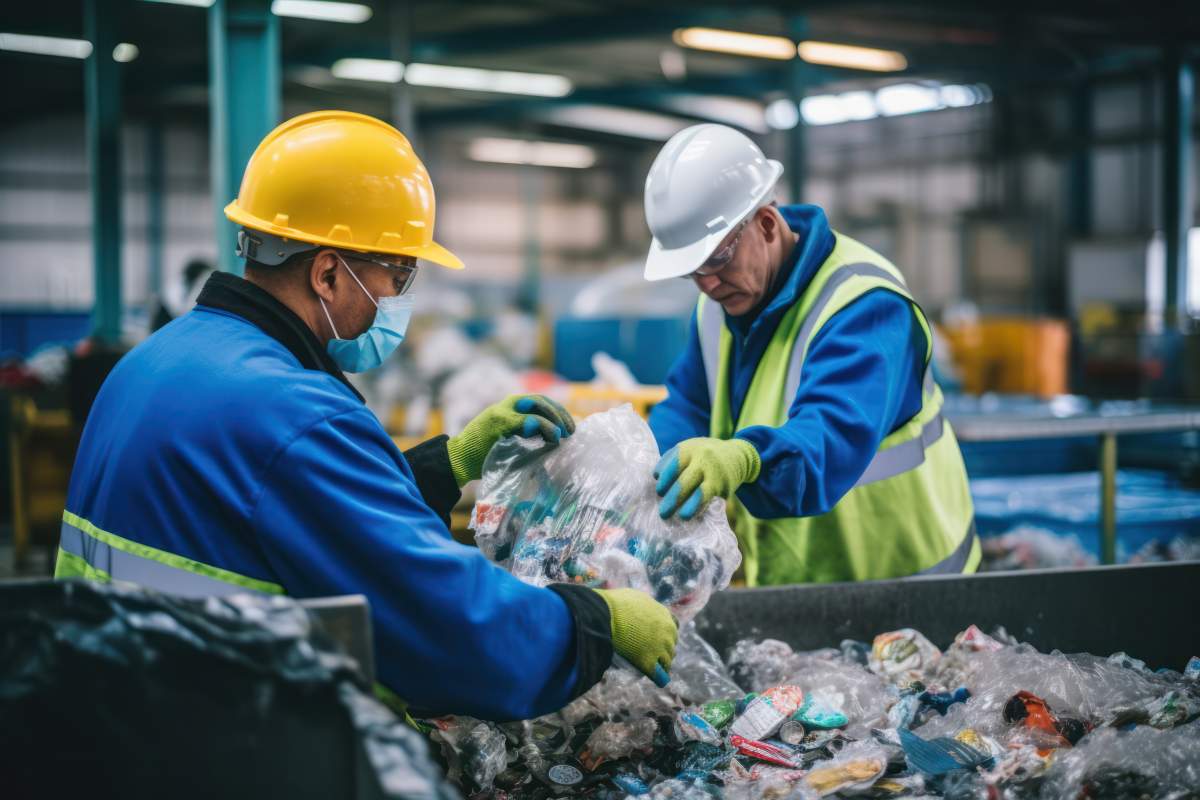
After collection, recycling is taken to a materials recovery facility, where machines and workers separate items by material type. Paper and cardboard are processed separately from bottles, jars, tubs, and cans so each material can be prepared for a different recycling market.
Recycling is not simply emptied into one pile and turned directly into new products. It moves through several stages:
- Collection from homes and multifamily properties
- Delivery to a sorting facility
- Separation by material and quality
- Baling and shipment to manufacturers
- Processing into new paper, metal, plastic, or glass products
The quality of the material placed in the cart affects what can be recovered. Clean, correctly sorted items are more likely to move successfully through the system.
How are recycling bins arranged?
Residential recycling carts are split into two sections:
- One side is for bottles, cans, tubs, and glass bottles and jars.
- The other side is for paper and cardboard.
Containers such as bottles, jars, and tubs do not need to be flattened. Empty them, give them a quick rinse if needed, and place them loose in the container section. Keeping items loose helps sorting equipment and workers identify materials.
Paper and cardboard should be reasonably clean and dry. Flatten larger cardboard when necessary so it fits securely in the designated area or can be placed out according to local collection instructions.
Cartons are not accepted in recycling. This includes coated paper beverage and food cartons that may look similar to paper containers. They belong in the grey trash bin unless local instructions specifically direct otherwise.
Where does each material go?
Paper and cardboard
Paper and cardboard are separated by grade and quality. Newspaper, office paper, paperboard, and corrugated cardboard may be sent to different buyers because each has different fiber characteristics.
At a paper mill, the material is mixed with water to create a pulp. The pulp is screened and cleaned, then formed into new paper products. Recycled cardboard can become new shipping boxes, while recovered paper may be used for tissue, writing paper, or other fiber products.
Paper is easily damaged by moisture and food residue. A wet or heavily soiled load may have limited value, which is why food scraps and food-soiled material should go in the compost bin instead.
Bottles, cans, and tubs
Metal containers are separated using specialized equipment and then compacted into dense bales. Steel and aluminum are sent to metal processors, where they are melted and formed into new products.
Plastic containers are sorted by plastic type and color. The material may be chopped, washed, dried, and formed into pellets or flakes for manufacturing. Those recycled materials can become new containers, durable plastic products, fibers, or other manufactured goods.
Sorting facilities cannot guarantee that every container will be recovered. Items that are too contaminated, too small, incorrectly placed, or made from materials not accepted in the local program may be removed during processing.
Glass bottles and jars
Only glass bottles and jars belong in the recycling container. They are separated from other materials and sent for glass processing, where they may be crushed and used to make new glass products or other approved materials.
Glass works best when it is kept separate from paper and food waste. Mixing unrelated glass items with bottles and jars can create safety and processing problems.
What happens to recycling that cannot be recovered?
Not every item placed in a recycling bin can be recycled. Some materials are removed because they are too dirty, too small, damaged, or outside the local program.
Items that cannot be recovered are sent for disposal or another approved form of handling, depending on the material. This is why “wishful recycling”—placing something in the bin because it seems recyclable—can create more problems than leaving it out.
Plastic bags and other loose film can wrap around sorting equipment. Food and liquid can soil paper and cardboard. Batteries and electronic devices can create fire or safety hazards. E-waste found in recycling is separated for proper handling; it does not simply continue through the recycling stream.
Why does correct sorting matter in apartments and dense neighborhoods?
In multifamily buildings, many households share collection areas and containers. One incorrectly sorted bag can affect a large amount of otherwise usable material. Loose recycling is easier to inspect and sort than material placed in plastic bags.
Residents can reduce confusion by keeping the basic separation clear:
- Bottles, cans, tubs, and glass bottles and jars in the container section
- Paper and cardboard in the paper section
- Food scraps, grass trimmings, and yard trimmings in the compost bin
- Everything that is not accepted for recycling or compost in the grey trash bin
This separation is especially useful in compact housing settings where carts may fill quickly and contamination can spread between loads.
What belongs in the compost bin instead?
Grass trimmings and food scraps must go in the compost, or green, bin—not the trash. Food-soiled paper may also be accepted with organic material when local instructions allow it.
A kitchen pail can be lined with paper only. Plastic liners, including bio-plastic and “compostable” plastic liners, belong in the grey trash bin, not the compost. Even when a liner is labeled compostable, it may not break down properly in the local processing system and can be mistaken for ordinary plastic.
The compost stream is handled differently from recycling. Organic material is processed under controlled conditions and turned into compost or other beneficial products. Keeping food and yard material out of recycling helps protect the paper stream from moisture and contamination.
Do recyclables need to be perfectly clean?
Recyclables do not need to be spotless, but they should be empty and reasonably free of food or liquid. A quick rinse is usually enough for containers. Excess water is not necessary.
A useful rule is:
- Empty the container.
- Scrape out remaining food.
- Rinse when needed.
- Keep the item loose.
- Place it in the correct section.
Paper should remain dry. A cardboard box with a small amount of ordinary dust is different from cardboard saturated with grease or food residue.
Does putting something in the recycling bin guarantee it will become a new product?
No. Recycling depends on material quality, local acceptance rules, available processing capacity, and demand from manufacturers. Correct sorting improves the chance that an item will be recovered, but it cannot guarantee that every item will be turned into a new product.
The most reliable approach is to follow the local list rather than relying on a recycling symbol, a product label, or assumptions about what another community accepts. Rules differ because collection carts, sorting equipment, processors, and end markets differ.
For households in Millbrae, careful separation is the first step in the journey. Once collected, the material still has to pass through sorting, quality checks, processing, and manufacturing before it becomes something new.